Martin Luther University Halle (MLU)
How Martin Luther University has improved collaborative writing with SciFlow
Introduction of the online text editor SciFlow for writing academic papers
Focus on what matters-the content-by using SciFlow
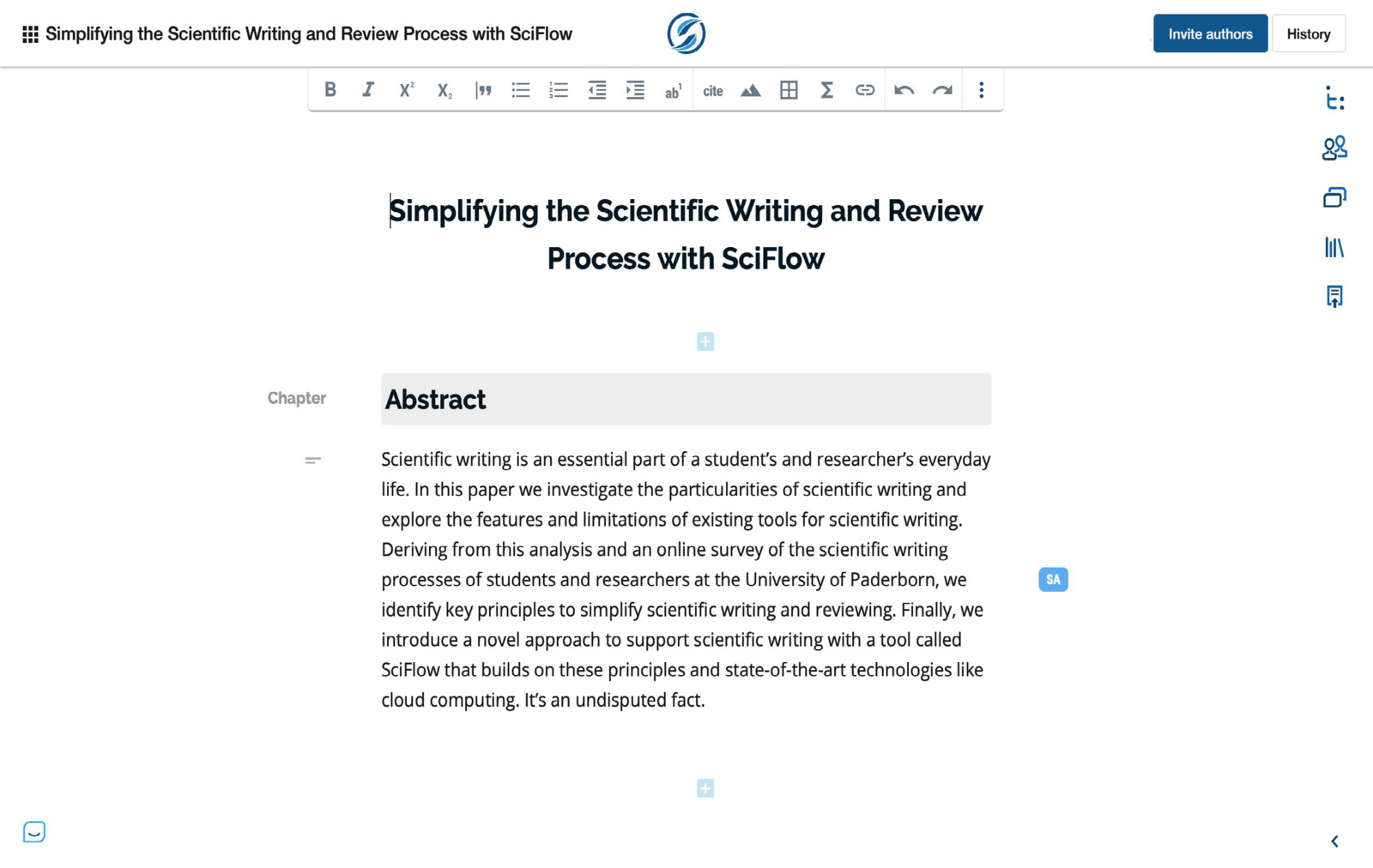
The “Google Docs” for science and academia
Collaborative writing made simple
Academic papers are written right in the browser with SciFlow. Teams and groups always see the same version of the document, enabling them to collaborate directly on the text without countless emails and versions of the document.
The right citation style at the push of a button
Easily connect common literature management programs to SciFlow to format your references in the citation style of your choice at the push of a button.
Easy to get started
SciFlow offers students and researchers an extensive support forum, webinars and personal support. SciFlow also ensures a smooth rollout on campus.
Saving time during formatting
It can take up to two business days for a paper to be properly formatted. SciFlow provides members of the institution with the necessary templates for journals, enabling the text to be automatically converted into the appropriate format.
Initial situation at MLU
- 20,000 students
- 5,000 employees
Decentralized campus = difficult collaboration
Like many historical universities that have grown over time, there is no single central campus. The departments are located in different parts of the city. As a result, it is rather difficult to physically share documents and to work together on one computer.
Document chaos and time-consuming formatting
At Martin Luther University Halle-Wittenberg (MLU), the classic software Microsoft Word was used for writing scientific and academic texts. Students and researchers formatted their papers by hand and used different versions of files sent by email to work on collaborative projects. Anyone who has ever worked with several writers on a Word file knows the chaos that the many different versions can cause.
Google Docs usage not allowed
For data protection reasons, MLU decided to use a system that stores the data in Germany.
2 Days for formatting a manuscript for publication in a journal.¹ That’s 52 hours (or a very long week) per researcher spent each year on tedious work.
1 Source: LeBlanc et al., 2019.
The decision to choose SciFlow
Privacy, collaborative writing and templates
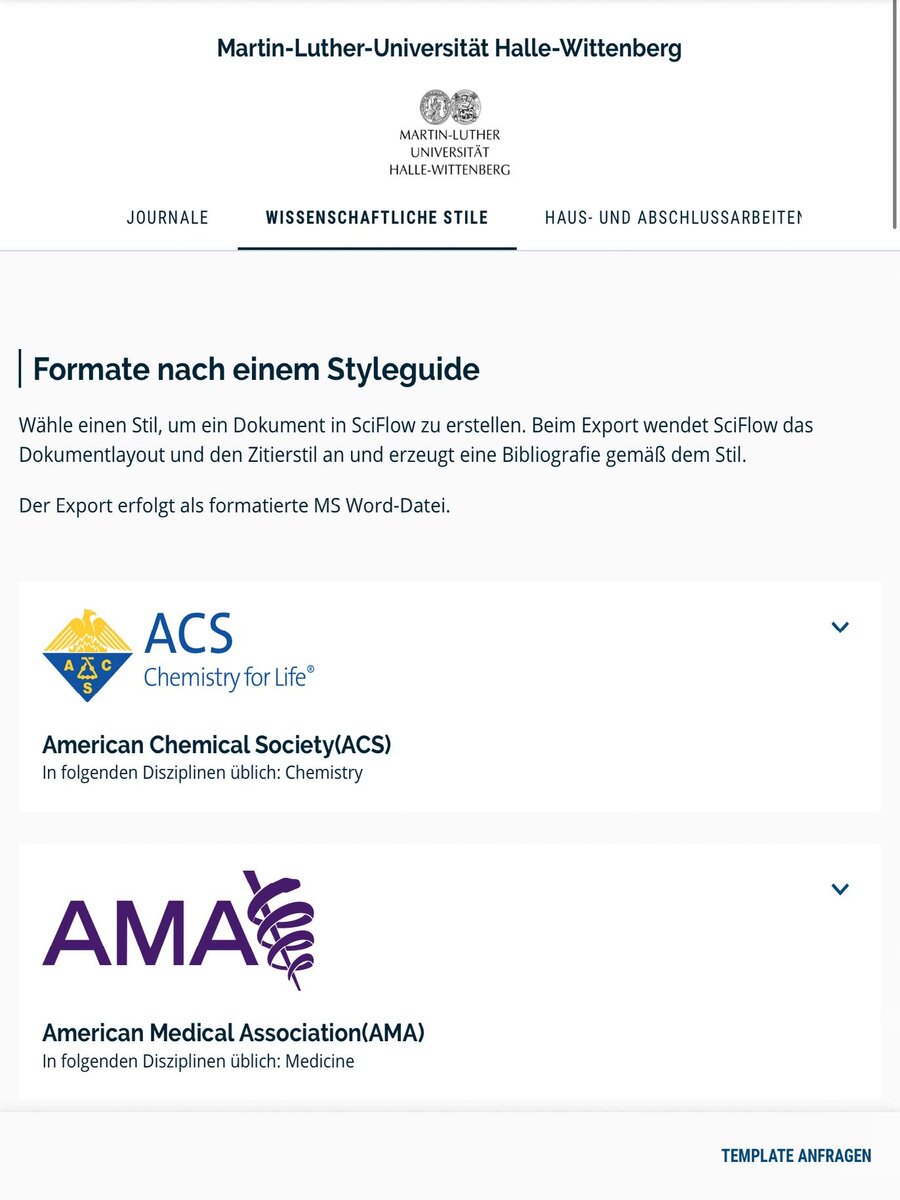
MLU decided on SciFlow due to various advantages over other providers. According to the university, the fact that Germany is the location of both the company and its servers was key to meeting data protection requirements. The possibility of online collaboration of all persons involved in writing a document won over MLU officials. SciFlow provides templates that enable users to automatically format their documents in terms of font, font size, layout and citation style. In addition to general templates, SciFlow also creates and provides university-specific templates.
Easy to use for Word users
In searching for a viable alternative to Google Docs, MLU looked at Overleaf and HackND, in addition to SciFlow. “These are rather specialized programs, however. For example, knowledge of LaTeX and Markdown is required,” explains Mr. Brenn, who, as a member of the OpenScience team, was the coordinator for the introduction of a new text editor. Many university staff members and students do not possess such knowledge. Etherpad as an open-source solution was out of the question due to the lack of formatting options.
Already active users
SciFlow and MLU first established contact in late 2017. At the time, there were already some initial users at the university writing their papers with SciFlow. The existing users and MLU employees met with SciFlow founders Frederik Eichler and Dr. Carsten Borchert to present the tool and discuss what a possible partnership might look like.
“There is no comparable provider when it comes to templates.”
Library / Open Science
Rollout at MLU
Prioritization of new features
When the user agreement was concluded, MLU had a say in features that were particularly important for its operations. In addition to the existing range of functions, university officials decided to introduce file versioning, link storage, manual page breaks and the straightforward integration of Zotero.
Researchers can easily import their existing data sources from Zotero into SciFlow and, in the collaborative writing process with colleagues, create versions of the document at crucial points, which can be accessed later.
SciFlow provides quarterly usage statistics in which the development of the numbers can be followed. The exact requirements were discussed in advance. In early November 2018, the project commenced.
Connecting the university and SciFlow
SciFlow created a customized access page for MLU where users can easily access the available templates. In addition, the page features notifications of upcoming educational events for students and researchers.
“From a technical point of view, all that was needed was to create a link to the access page on our website.”
Posters and flyers were distributed in various departments throughout the university informing students and researchers alike that SciFlow was now available to them as a tool. Also, the faculties were made aware of the new offer by email and through advertising on the university website.

“Facing the digital transformation in libraries means starting to try out innovative, research-related services when a clear added value for researchers and students becomes apparent. Since SciFlow’s rollout at MLU, we have had a good experience with the tool, which is constantly being improved and enjoying increasing use at our institution.”
 Anke Berghaus-Sprengel
Director of the University and State Library of Saxony-Anhalt
First Deputy Chair of the Association of German Librarians
Use and development of the collaboration
Training and support for active users
In the beginning, users had questions about how to use the tool. They could reach out to the easily accessible support team or attend regular training sessions.
“Support in particular is critical to our usage scenario, since possible problems involve critical documents. So far, the SciFlow team has provided quick and helpful solutions for all inquiries.”
In addition to on-site workshops, regular online webinars provide an introduction to the many functions of SciFlow. Dr. Carsten Borchert considers webinars to be an important service, since a high double-digit percentage of the participants write their next scientific paper in SciFlow. An extensive support forum is also available for users working on their own.
Initiative and individual adjustments
SciFlow has undergone continuous enhancement since the beginning of the campus agreement with MLU. Close contact with many users has enabled the SciFlow team to make constant improvements to the tool and roll out new functions. Mr. Brenn remarks that these improvements are being made, even if the university does not point them out. Furthermore, MLU’s requests (manual page breaks, Zotero integration, versioning, hyperlinks) were implemented as agreed and have been available to all users since then.
Services and adjustments
- Access page for the online library
- Creation of 15 department-specific templates
- Regular workshops and webinars
- Templates for journals
- Technical & professional support
- Introduction of file versioning
- Creation of links
- Integration with Zotero
Case study: 80 students collaborate in SciFlow
COVID-19 calls for new ways of collaborating
Martin Siebach chose an unusual use case for SciFlow. For a course module in which three lecturers are involved, a new way of collaborating in a digital teaching environment had to be found in order to comply with the COVID-19 regulations. The students and lecturers had to be able to view and comment on each other’s ideas. This kind of collaboration was possible with SciFlow.
From secondary function to main player
A table was created in which the more than 80 students working on the document could exchange information with the help of comments and by writing within the table. One lesson for SciFlow: Deleted comments must still be visible in the version control, otherwise (accidentally) deleted comments cannot be restored.
A tool for all cases – preferably for the core application
Mr. Siebach would return to SciFlow for more classical applications: “In smaller seminar groups, in which something is worked out together scientifically, SciFlow is simply the most suitable choice.” Nevertheless, the important takeaway still remains that, in times of crisis, a little creativity will help you find uses that no one had thought of before.
Talk to us about your institution
Martin Luther University Halle improved collaborative writing with SciFlow, from the first contact in late 2017 to templates, webinars and support for its students and researchers.